The Smallest Component Can Decide Whether Cathodic Protection Is Telling the Truth
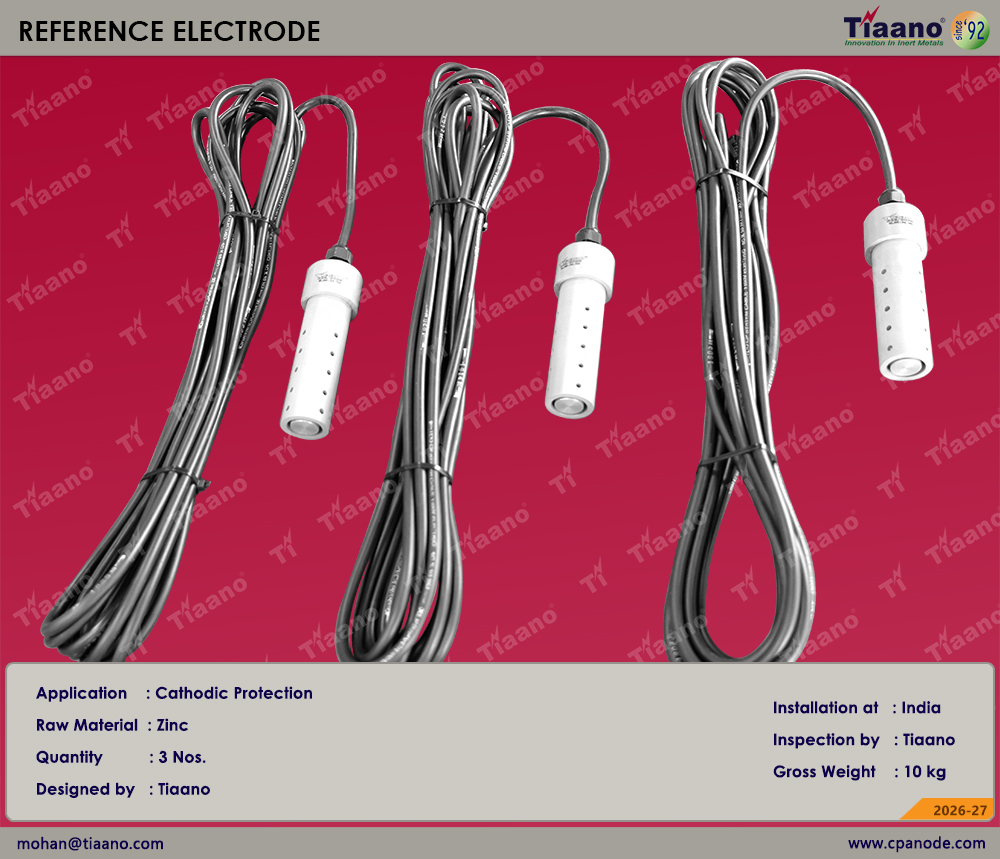
A cathodic protection system can be supplying current exactly as designed—and still leave engineers with the wrong impression if the reference electrode is not providing reliable potential measurements.
That makes the Reference Electrode more than a monitoring accessory. It is the measurement point that helps engineers determine whether the protected structure is actually receiving the required level of electrochemical protection.
For cathodic protection systems, Tiaano’s Reference Electrode, manufactured using zinc, is designed to provide a practical reference point for monitoring structure-to-electrolyte potential.
The Technical Insight: Protection Depends on Measurement
Cathodic protection systems are commonly controlled or assessed using potential measurements.
If the reference point is unreliable, engineers may respond to incorrect information.
This can lead to:
- Unnecessary adjustment of protection current
- Inadequate protection caused by underestimation
- Excessive current caused by overestimation
- Difficulty troubleshooting CP performance
- Uncertainty during periodic inspections
The reference electrode therefore plays a critical role in the measurement chain.
Its job is not to protect the structure directly. Instead, it provides the electrochemical reference against which the structure's potential can be evaluated.
Reference Electrode vs Conventional Monitoring Approaches
Traditional monitoring arrangements can involve temporary reference electrodes or measurement methods that are inconvenient for repeated field assessments.
A dedicated reference electrode offers a more practical approach when long-term monitoring is required.
Conventional or temporary approach
- Reference point may need repeated positioning
- Measurements can be less convenient
- Field access may complicate inspections
- Consistency between measurement locations can become a concern
Dedicated Reference Electrode
- Installed as part of the CP monitoring arrangement
- Provides a defined measurement reference
- Supports repeated potential measurements
- Can simplify routine inspection activities
- Suitable for integration with cathodic protection monitoring systems
The objective is not simply to replace one electrode with another. It is to make the measurement process more consistent and useful for maintenance decisions.
A Realistic Case Study: From Uncertainty to Better Monitoring
Consider a buried pipeline facility where the cathodic protection system is functioning, but periodic potential readings vary more than expected.
Before
The maintenance team spends additional time checking connections and repeating measurements.
The uncertainty makes it difficult to determine whether the variation originates from the CP system, the structure, or the measurement arrangement.
After
A dedicated zinc Reference Electrode is installed at the required monitoring location.
The team now has a defined reference point for repeated measurements.
The practical improvement is clear:
Before: repeated measurements with uncertainty around the reference condition.
After: a consistent monitoring point that helps engineers compare potential readings over time.
This does not eliminate every CP measurement variable, but it can make trend analysis and troubleshooting considerably more structured.
Where Reference Electrodes Matter
Reference electrodes can support monitoring requirements across several cathodic protection applications, including:
1. Pipelines – monitoring buried or submerged metallic structures.
2. Storage tanks – assessing protection around tank-bottom systems.
3. Marine structures – supporting potential measurements on submerged assets.
4. Industrial plants – monitoring corrosion-control systems around process infrastructure.
5. Water infrastructure – supporting CP assessment for metallic components exposed to electrolytes.
The correct reference electrode selection depends on the electrolyte, installation environment, measurement requirements and CP design.
What Engineers Should Consider
Before selecting a reference electrode, review:
- Application environment
- Required installation depth or position
- Cable routing requirements
- Expected exposure conditions
- Measurement frequency
- Compatibility with the CP monitoring system
- Required reference material
For this Reference Electrode, zinc is used as the raw material, while the electrode is designed specifically for cathodic protection monitoring requirements.
The Engineering Takeaway
Cathodic protection is ultimately a controlled electrochemical process, and good control depends on dependable measurements.
A properly selected Reference Electrode helps engineers establish a consistent basis for evaluating structure potential, identifying changes and making informed maintenance decisions.
For plant managers, the value is straightforward: better measurement can lead to better CP decisions.
For cathodic protection electrode and monitoring requirements, visit www.cpanode.com or contact mohan@tiaano.com.